
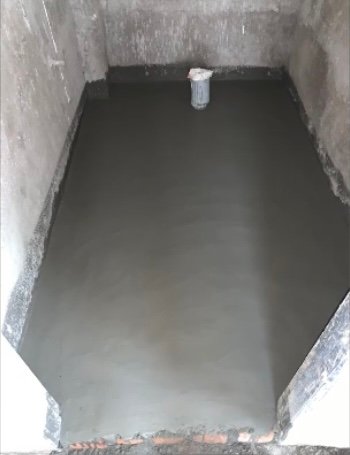
Bathroom leakage usually comes from damaged or missing waterproofing, cracked tiles and grout, faulty plumbing, poorly sealed pipe penetrations, wrong floor slope or poor construction detailing. Fixing it starts with finding the real source, then preparing the surface, applying a suitable liquid, cementitious or sheet system, curing it and water-testing before tiling. Cost depends on the area, existing damage, system and plumbing repairs, so a site inspection gives the reliable quote.
- Dampness does not always mean waterproofing has failed: plumbing, drainage and external wall seepage can look the same.
- Grout or tile repair alone will not fix a failed waterproofing layer under the tiles.
- Liquid-applied, cementitious and sheet membranes each suit different bathrooms; product compatibility and installation matter most.
- Waterproof before tiling and water-test before the system is covered.
Bathroom leakage is a common property maintenance problem that can affect apartments, independent houses, commercial buildings, hotels, and other properties. Water escaping through floors, walls, pipe connections, or poorly sealed joints can lead to damp patches, peeling paint, damaged finishes, and moisture problems in adjoining rooms or the ceiling below.
In many cases, the visible damage is only a sign of a deeper moisture issue. Simply repainting a damp wall or replacing damaged tiles may not resolve the underlying cause.
This is where bathroom waterproofing becomes important.
Bathroom waterproofing involves creating a suitable protective barrier that helps prevent water from penetrating vulnerable surfaces and entering the building structure. When correctly specified and installed, an appropriate waterproofing system can help reduce leakage risks, protect adjacent areas, and improve the long-term durability of the bathroom.
In this guide, SS Projects explores the common causes of bathroom leakage, the importance of wet-area waterproofing, available treatment methods, cost considerations, and practical steps for selecting a suitable solution.
What Is Bathroom Waterproofing?
Bathroom waterproofing is the process of protecting bathroom floors, walls, joints, and other water-exposed areas against unwanted water penetration.
Bathrooms experience repeated exposure to water from showers, washbasins, floor cleaning, plumbing fixtures, and other wet-area activities. Without a suitable waterproofing system, water can enter porous construction materials or pass through cracks and weak joints.
A properly designed bathroom waterproofing system may include:
- Waterproofing membranes or suitable waterproof coatings.
- Treatment of floor-to-wall junctions and other vulnerable joints.
- Sealing around appropriate pipe penetrations and fixtures.
- Proper substrate preparation and repair.
- Correct drainage slopes and outlet detailing.
- Compatibility between the waterproofing system, adhesive, tiles, and finishing materials.
The appropriate method depends on the building condition, moisture source, surface material, exposure level, and whether the bathroom is under construction or already in use.
Why Is Bathroom Waterproofing Important?
Waterproofing is an important part of bathroom construction, renovation, and maintenance because water can travel through small openings that may not be immediately visible.
1. Helps Prevent Water Leakage
Waterproofing creates a protective layer that helps prevent water from penetrating vulnerable surfaces when the system is correctly selected, installed, and maintained.
2. Protects Walls, Ceilings and Adjacent Rooms
Water escaping from a bathroom may affect nearby bedrooms, corridors, adjoining walls, or the ceiling of the floor below. An appropriate waterproofing system can help reduce this risk.
3. Helps Reduce Dampness and Surface Damage
Persistent moisture can contribute to peeling paint, damaged plaster, loose finishes, and other deterioration. Addressing the underlying source of moisture is essential before restoring damaged surfaces.
4. Supports Building Durability
Repeated water penetration can affect building materials and, in some situations, contribute to deterioration of embedded metal components. Proper moisture management helps protect the building over time.
5. Helps Reduce Repeated Repair Expenses
When leakage is addressed at its source, property owners may avoid repeated cycles of repainting, replacing damaged finishes, and repairing affected areas.
Waterproofing does not eliminate every possible plumbing or drainage problem, so correct diagnosis is essential.
What Are the Common Causes of Bathroom Leakage?
Identifying the source of water is the first step toward selecting an effective treatment.
1. Damaged or Missing Waterproofing
Bathrooms with inadequate waterproofing or deteriorated protective layers may allow water to penetrate the underlying substrate.
2. Cracked Tiles and Deteriorated Grout
Cracked tiles, damaged grout, and poorly sealed joints can allow water to reach underlying layers. However, grout and tile repairs alone may not solve a leakage problem if the waterproofing layer beneath is defective.
3. Faulty Plumbing Connections
Leaking supply pipes, drainpipes, taps, shower connections, or concealed plumbing can cause moisture even when the waterproofing system is intact.
4. Poorly Sealed Pipe Penetrations
Openings around plumbing fixtures and pipes can become vulnerable points if the surrounding waterproofing and sealing details are not properly executed.
5. Incorrect Floor Slope or Drainage
If the bathroom floor does not direct water efficiently toward the drain, standing water may increase exposure around joints and vulnerable areas.
6. Poor Construction Detailing
Insufficient surface preparation, incompatible materials, inadequate curing, or improperly treated floor-to-wall junctions can reduce the effectiveness of a waterproofing installation.
Important: Dampness does not always mean waterproofing has failed. Plumbing leaks, condensation, external wall seepage, and drainage problems can produce similar symptoms. The cause should be assessed before selecting a repair method.
What Are the Different Methods of Bathroom Waterproofing?
There is no single waterproofing method suitable for every bathroom. The choice depends on the substrate, site conditions, product specifications, and installation requirements.
1. Liquid-Applied Waterproofing Membrane
Liquid-applied systems are applied to prepared surfaces and form a continuous waterproofing layer after curing.
Depending on the product, they may be suitable for bathroom floors, walls, shower areas, and other wet zones.
Potential advantages:
- Can form a continuous layer over appropriately prepared surfaces.
- Can accommodate detailed application around corners and penetrations when correctly installed.
- May be suitable for renovation and new construction.
The substrate must be prepared correctly, and the membrane must be applied at the specified coverage and thickness. Not every liquid membrane is compatible with every tile adhesive or substrate.
2. Cementitious Waterproofing
Cementitious waterproofing products are cement-based systems designed for suitable mineral substrates.
They may be used in bathrooms and other wet areas when the selected product is appropriate for the exposure conditions.
Potential advantages:
- Compatible with many cement-based construction substrates.
- Can be practical for selected renovation and construction applications.
- Offers a mineral-based waterproofing option.
Product flexibility, crack-bridging capability, curing requirements, and suitability for continuous immersion vary by system. The manufacturer's specifications should guide selection.
3. Sheet Waterproofing Membranes
Sheet membranes are installed over prepared surfaces to provide a continuous waterproofing layer.
They can be useful in applications where a specified membrane system and carefully executed joints, corners, and penetrations are required.
Installation quality is especially important at membrane overlaps, transitions, drains, and pipe openings.
4. Joint and Penetration Treatment
Floor-to-wall junctions, movement joints, and pipe penetrations require appropriate detailing as part of the overall waterproofing system.
Depending on the design, compatible sealing products, reinforcement tapes, collars, or other accessories may be required.
Treating only the visible joint may not be sufficient if water is entering through another part of the bathroom.
What Is the Bathroom Waterproofing Process?
A reliable bathroom waterproofing project generally follows a planned sequence. The exact procedure varies by system and site conditions.
Step 1: Inspect the Affected Area
Assess visible dampness, leakage patterns, plumbing connections, drainage, tile condition, and adjoining surfaces.
If the source is unclear, further investigation may be necessary before work begins.
Step 2: Identify the Root Cause
Determine whether the problem is related to failed waterproofing, plumbing, drainage, damaged joints, or another source of moisture.
This step helps avoid applying a waterproofing coating to a problem that requires a different repair.
Step 3: Prepare the Surface
Remove loose or unsuitable material where required, repair defects, and prepare the substrate according to the selected system's specifications.
Surface preparation is important for achieving the intended bond and performance.
Step 4: Apply the Waterproofing System
Apply the specified membrane or coating according to the manufacturer's instructions, including required coats, coverage rates, thickness, reinforcement, and curing conditions.
Treat corners, drains, pipe penetrations, and transitions carefully.
Step 5: Allow Appropriate Curing
Allow the system to cure for the specified period before proceeding with subsequent work. Premature tiling or water exposure can compromise some systems.
Step 6: Conduct Suitable Testing
Where appropriate, perform a controlled water-retention or other specified waterproofing test after the system has cured and before it is covered with tiles.
The test method and duration should follow the system requirements and site conditions.
Step 7: Complete Finishing Work
Install compatible tile adhesives, tiles, grout, sealants, and fixtures as required.
Finishing work should not damage the waterproofing layer or compromise its detailing.
How Much Does Bathroom Waterproofing Cost in India?
Bathroom waterproofing costs vary depending on the bathroom's size, existing condition, waterproofing method, material requirements, and labour involved.
There is no reliable single price for every project.
The main cost factors include:
- Area to be treated: Floor-only waterproofing differs from floor-and-wall treatment.
- Existing damage: Removal of tiles, screed, plaster, or damaged materials may increase the project cost.
- Waterproofing system: Material type, specified coverage, number of coats, and required accessories affect the budget.
- Plumbing repairs: Concealed leaks or damaged drain connections may need separate repair work.
- Surface preparation: Cracks, uneven substrates, and deteriorated surfaces may require additional preparation.
- Testing and finishing: Testing, tile replacement, grout work, and restoration can contribute to the overall cost.
How to Obtain an Accurate Estimate
Before requesting a quotation, identify the bathroom's approximate dimensions, whether tiles need to be removed, where leakage is visible, and whether the affected area is accessible.
Ask the contractor to clarify:
- The proposed waterproofing method and product.
- The surfaces included in the scope.
- Surface preparation and repair requirements.
- The number of coats and application specifications.
- Curing and testing procedures.
- Whether tiles, plumbing repairs, and finishing work are included.
- Applicable warranty terms and exclusions.
A site assessment and clearly defined scope generally provide a more meaningful estimate than a price based only on bathroom size.
Bathroom Waterproofing for New Construction vs. Renovation
The right approach depends partly on whether the bathroom is being constructed for the first time or repaired after leakage has developed.
Waterproofing During New Construction
New construction provides an opportunity to integrate waterproofing into the floor and wall details before tiles and fixtures are installed.
The design should account for drainage, floor-to-wall junctions, pipe penetrations, compatible finishes, and the specified testing procedure.
Waterproofing During Renovation
Renovation requires identifying why the existing system is failing, if it has failed at all.
In some cases, localized plumbing or joint repairs may be sufficient. In other cases, damaged finishes and failed waterproofing may need to be removed before a replacement system can be installed.
Applying a new coating over existing tiles should only be considered when the product and substrate conditions specifically support that application. It is not a universal solution for bathroom leakage.
How Can You Prevent Future Bathroom Leakage?
Regular maintenance can help identify potential problems before they cause extensive damage.
- Inspect visible grout, sealant joints, and damaged tiles periodically.
- Repair leaking taps, pipes, and drainage connections promptly.
- Keep floor drains clear and check that water drains effectively.
- Avoid drilling through waterproofed areas without suitable detailing and resealing.
- Use compatible cleaning and maintenance products.
- Investigate recurring damp patches rather than repeatedly repainting affected walls.
- Follow the waterproofing system's maintenance and inspection recommendations.
Preventive maintenance complements waterproofing but does not replace a properly designed and installed system.
Why Choose a Professional Bathroom Waterproofing Service?
Bathroom waterproofing involves more than applying a coating. The underlying cause of leakage, the condition of the substrate, and the compatibility of the materials all influence the outcome.
A professional assessment can help determine the appropriate repair scope and waterproofing method.
When evaluating a waterproofing contractor, consider:
- Experience with similar bathroom and wet-area projects.
- A clear inspection and diagnosis process.
- Appropriate product selection and documented application procedures.
- Attention to corners, joints, drains, and pipe penetrations.
- Suitable curing and testing procedures.
- Transparent quotations, scope definitions, and warranty conditions.
For property owners, the goal should be a suitable, well-executed waterproofing system rather than simply the lowest initial quotation.
Bathroom Waterproofing Services by SS Projects
Bathroom and wet-area waterproofing is one of the service categories listed by SS Projects.
If you are experiencing bathroom leakage, damp patches, or water seepage affecting nearby walls or ceilings, the first step is to identify the likely source and determine which treatment is appropriate for your property.
SS Projects provides bathroom and wet-area waterproofing for homes, apartments and commercial properties in Nalgonda and across Telangana. The company states that bathroom waterproofing typically takes around 1-2 days, depending on site conditions, and that its work carries a 5-year warranty. It also offers a free site inspection and quotation.
Related services include internal wall waterproofing for dampness that has reached adjoining walls, crack filling and repair, and terrace and roof waterproofing where leakage is coming from above.
Before proceeding, discuss the affected area, the observed leakage symptoms, the proposed treatment method, and the scope of work with the service provider.
Frequently Asked Questions About Bathroom Waterproofing
What is the best method for bathroom waterproofing?
The best method depends on the substrate, moisture exposure, existing condition, and project requirements. Liquid-applied membranes, cementitious systems, and sheet membranes can all be suitable in the right applications. Product compatibility and correct installation are essential.
Is bathroom waterproofing necessary before tiling?
Waterproofing is an important part of wet-area construction where required by the design and applicable building specifications. Installing an appropriate system before tiling helps protect vulnerable surfaces from water penetration. Follow the selected system's application and testing requirements.
Can bathroom leakage be fixed without removing tiles?
Sometimes. If the source is an accessible plumbing connection or a localized sealant defect, a targeted repair may be possible. If the waterproofing layer beneath the tiles has failed, more extensive work may be necessary. The correct approach depends on the cause.
How long does bathroom waterproofing take?
The duration depends on the area, surface preparation, repair work, product application, curing time, and testing requirements. Some projects require several stages over multiple days. Follow the product manufacturer's instructions rather than relying on a fixed timeline.
How can I identify bathroom waterproofing failure?
Possible signs include recurring damp patches, water stains on ceilings below the bathroom, damaged finishes, or leakage appearing after shower use. These signs can also result from plumbing or drainage problems, so further assessment may be needed.
Does bathroom waterproofing prevent leakage permanently?
No system should be assumed to provide permanent protection under every condition. Performance depends on product suitability, installation quality, building movement, maintenance, and exposure. Ask about the system's limitations and applicable warranty.
Should bathroom walls also be waterproofed?
The required wall coverage depends on the bathroom design, shower configuration, water exposure, and applicable specifications. Shower zones and other wet areas may require wall waterproofing in addition to floor protection.
What factors affect bathroom waterproofing cost in India?
Area, surface condition, material selection, preparation, plumbing repairs, application requirements, testing, and finishing work all influence the cost. A site inspection and itemized quotation provide a better estimate than a generic price.
What is the difference between waterproofing and tile grouting?
Grouting fills the joints between tiles, while a waterproofing system protects the underlying surface against water penetration. Grout repairs may address some defects, but they do not necessarily correct a failed waterproofing membrane.
When should I contact a bathroom waterproofing professional?
Seek professional assessment when leakage recurs, dampness spreads, water reaches a lower-floor ceiling, or the source cannot be identified. Electrical hazards, significant structural cracking, and rapidly worsening leakage require appropriate specialist attention.
Conclusion
Bathroom waterproofing plays an important role in protecting buildings from water penetration, moisture-related damage, and avoidable repair work.
Understanding the causes of leakage, choosing a suitable waterproofing method, preparing the surface correctly, and following proper application and testing procedures can help improve system performance.
Whether you are planning a new bathroom or addressing an existing leakage problem, begin with a careful assessment and a clearly defined scope of work.
Explore the bathroom and wet-area waterproofing services listed by SS Projects to take the next step toward addressing your property's waterproofing requirements.
Also read: Terrace Leakage: Causes, Solutions & Waterproofing Guide and Waterproofing in Nalgonda: Complete Guide.
Need Help With Bathroom Leakage?
If your bathroom has damp patches, leakage or seepage affecting nearby walls or the ceiling below, get the source inspected before choosing a repair.
SS Projects provides professional waterproofing solutions for residential, commercial and industrial properties in Nalgonda and Telangana.
Book Free Inspection Call +91 91826 40947 SS ProjectsSavarkar Nagar, Nalgonda, Telangana - 508001
Phone: +91 9182640947
Email: info@ssprojects.in